

The retail landscape has undergone a seismic shift over the last twelve months, particularly regarding how we view the physical store. For a long time, the “digital” and “physical” worlds of retail operated in silos. But as we move further into 2026, those lines are blurring because retailers and brands are seeing measurable results with in-store advertising. At Walkbase, we are seeing firsthand how in-store retail media is no longer just a concept; it is actively reinventing the aisle.
The aisle is quickly evolving into a measurable, influence-driven environment with lower technology costs and margin pressure across other media channels. By leveraging new technologies and a deeper understanding of shopper behavior, we are turning the physical store into the most powerful media channel in a brand’s arsenal. Here is how we are making that happen.
What’s Driving Adoption of In-Store Media?
The sudden surge in adoption we’ve seen recently is driven by two primary factors. First, the barrier to entry has dropped significantly; the cost of technology and implementation is no longer the “scary” CapEx investment it once was.
 Secondly, we are reaching a saturation point with digital inventory. In North America, many retailers have exhausted their options for on-site search and product ads. They are finding that off-site opportunities often don’t provide the high margins they initially expected. In contrast, the store is an owned property. Because retailers own the “dirt” and the “shelf,” the margins for in-store media are much more attractive. Lower costs coupled with higher margin potential have created a perfect storm for rapid adoption.
How Can Retailers Avoid “Noise” with In-Store Media?
One of the biggest concerns I hear from retailers is the fear of turning their stores into Times Square. We are already bombarded by screens in every aspect of our lives; the last thing a shopper wants is to be overwhelmed by a chaotic “noise” of irrelevant messages at the shelf level.
The key to avoiding this is contextual relevance. With digital screens and full-motion video, we have the power to make an impact that actually helps the shopper. By using behavioral data, we can understand where a customer came from, where they are going next, and how long they are spending in specific departments.
Relevance also means looking at external factors. A shopping trip at 5:00 PM on a Tuesday looks very different from a stock-up trip on a Saturday morning. By factoring in the time of day, the day of the week, or even the weather outside, we can deliver messages that create a frictionless journey rather than a distracting one.
How Is In-Store Retail Media Measurement Evolving?
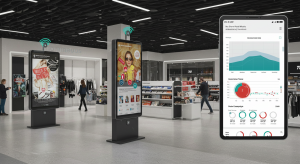
Retail media is built on the promise of measurability, and for a long time, the store was a “black box” compared to the web. That has changed. Over the last year or two, our ability to capture signals in a privacy-friendly way has evolved tremendously.
Through the work of organizations like the IAB, we are finally defining what an “impression” actually looks like in-store. Whether we are using privacy-friendly cell phone signals or anonymous technology that detects a device “bouncing” off a shopper’s path to record dwell time, the data is now incredibly accurate. This allows us to tie specific ad units to actual shopper behavior, making in-store performance just as tangible and actionable as any other digital property.
What Does Personalization Mean in Physical Retail Media?
In the digital world, we are used to one-to-one personalization — knowing exactly who a user is and what they clicked. In the physical store, personalization looks a bit different; it’s about “anonymous cohorts” and privacy-safe measurement.
We don’t need to say, “Hey Ben, welcome back,” to be effective. Instead, we look at how groups of people behave in specific areas. A shopper in the produce section at the front of the store has a different intent than someone dwelling in the health and beauty aisle or the deli. By understanding these audience cohorts, we can curate content that feels personal and relevant to that moment without ever compromising individual privacy.
What’s Next for In-Store Retail Media Networks?
Looking ahead, I believe this year will be the “Year of Adoption” for in-store media and standardized measurement. I am particularly excited about integrating in-store data into the broader digital ecosystem. In short, we’re talking about comparable retail media performance metrics.
Our goal is to ensure that the in-store component of the omnichannel journey looks and feels like every other digital tactic an agency or brand uses. We are moving toward a future where we can perform A/B testing in the aisle and provide real-time updates on performance. We aren’t just adding screens to stores; we are making the physical store a fully integrated, actionable part of the global media landscape.
Why Measurement Will Define the Future of In-Store Retail Media
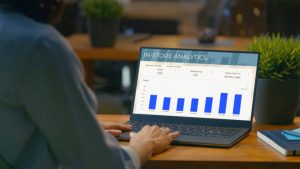 It is clear that in-store retail media has moved beyond pilots and is now a fundamental component of a modern retail strategy. To succeed in this new era, retailers must move past simply installing hardware and focus on the strategic trifecta of contextual relevance, privacy-safe measurement, and comparable retail media performance metrics that align with digital standards. By bridging the gap between physical behavior and digital insights, we can finally treat the brick-and-mortar environment with the same sophistication as a website or app. Ultimately, when measured correctly, the aisle becomes one of the most powerful moments in omnichannel retail media.
 Ben Reynolds leads the Walkbase business, an analytics and AI platform, for STRATACACHE. He is a proven marketing and technology executive, having previously held executive positions at Sara Lee, PRN (the largest in-store media provider), Hooklogic (pioneering sponsored ads outside of Amazon, now part of Criteo), and Maxpoint (a digital marketing leader leveraging a proprietary identity graph, now part of Vericast).